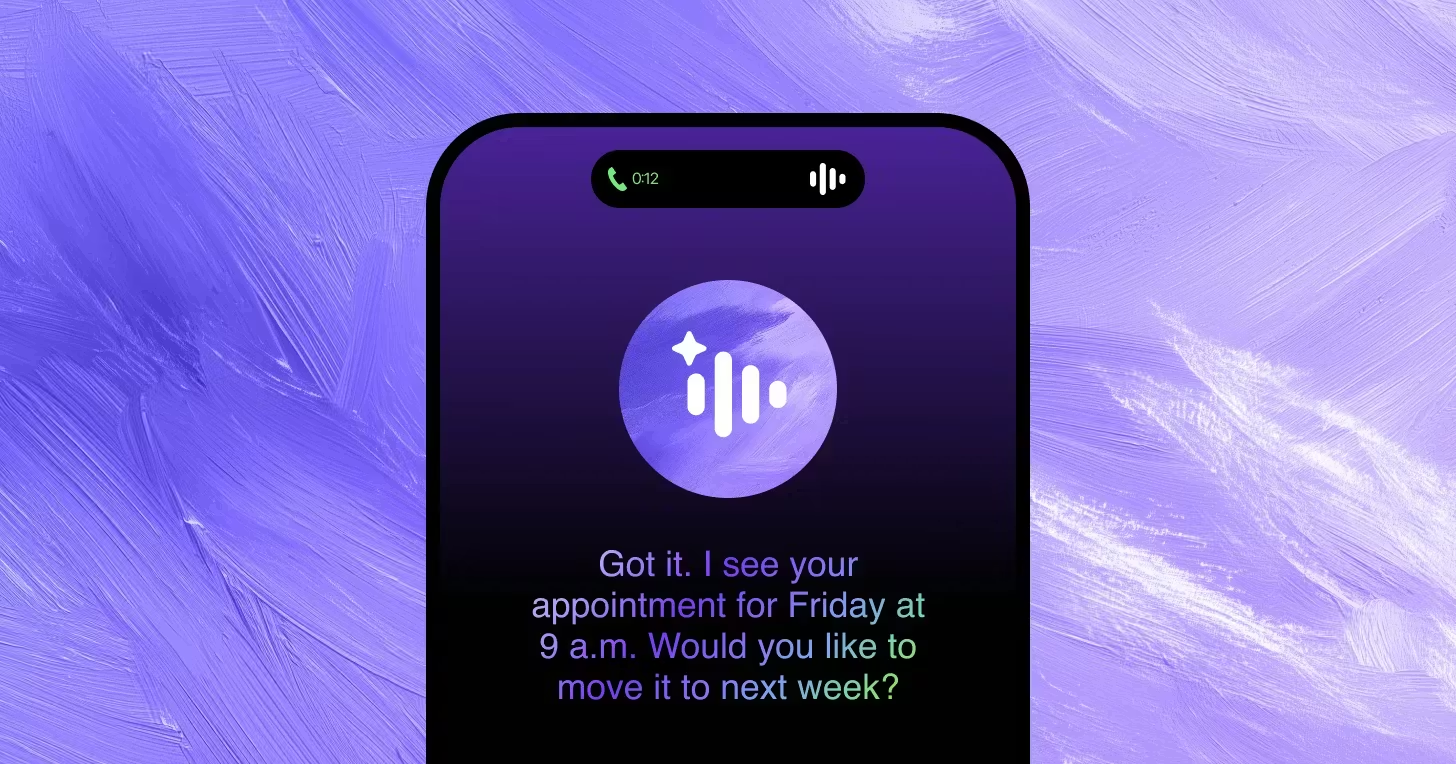
What is an AI receptionist? It is software that answers your business phone like a trained front-desk person: it greets the caller, finds out what they need, books the job or takes a clear message, and logs everything in your CRM so nothing sits in voicemail.
That is the short version. If you run a small business, the longer version matters more, because the phone is still how most high-intent customers try to hire you.
Owners on Reddit say the same thing in different words. You are under a sink, on a roof, or driving between jobs. The phone rings. You cannot pick up. The caller does not leave a voicemail. They dial the next name on Google. An AI receptionist exists to stop that leak.
What is an AI receptionist, in plain English
Think of it as a receptionist who never goes on break. It is not a chatbot sitting only on your website, and it is not the old "press 1 for sales" menu people hang up on.
A useful AI receptionist can:
- Answer inbound calls 24/7, including nights, weekends, and lunch rushes
- Ask simple qualifying questions, like the issue, address, and how urgent it is
- Book an appointment on your calendar when a slot is open
- Send a text confirmation so the caller is not left guessing
- Hand the call or a summary to you when the situation needs a human
The point is not to sound fancy. The point is to keep the lead with you instead of losing them in the 60 seconds after a missed ring.
How does an AI receptionist work?
The setup is simpler than most owners expect. You point your business number, or a call-forwarding rule, at the AI. When a call comes in and your team does not pick up, or when you want every call answered instantly, the AI takes it.
Here is the usual flow:
- The phone rings. The AI picks up in a second or two. No hold music. No "your call is important to us."
- It listens. The caller talks like they would to a person: "My AC died" or "I need a plumber today."
- It asks the next useful question. What is going on, where they are, and whether it is an emergency.
- It takes action. It books a slot, captures the lead, or texts your tech with the details.
- It writes it down. Name, number, issue, and notes land in your CRM so you are not reconstructing the call from memory later.
If the caller is upset, the job is messy, or they ask for a person, a good system transfers or alerts you. That human escape hatch is the thing Reddit owners complain about most when a tool is set up badly. Do not skip it.
What it can do, and what it should not do
AI receptionists are strong on repeatable calls. Hours, service area, "can you come today," booking a diagnostic, and catching after-hours emergencies are the sweet spot for plumbing, HVAC, and other trades.
They are weaker when the first conversation needs a lot of trust, legal judgment, or comfort. A burst pipe at 11 p.m. wants speed. A complicated commercial bid may still need you on the line.
Use it to cover the calls you already miss. Do not pretend it can close every high-stakes conversation by itself.
AI receptionist vs answering service vs voicemail
Voicemail is the most expensive option, even though it looks free. Most callers hang up. An answering service uses real people, which can feel warmer, but they often take a message instead of booking the job, and after-hours coverage costs extra. An AI receptionist is cheaper to run around the clock and can book into your calendar if you connect it properly.
If you want a side-by-side look at tools, read the best AI receptionist for small business, compared. If budget is the question, see how much an AI receptionist costs in 2026.
What to look for before you turn it on
You do not need to become a tech person. You do need to check four things:
- It books, not just takes messages. A message you see an hour later is often too late.
- It texts you a summary. You should know the issue before you call back.
- It can reach a human. Emergencies and angry callers need a real person fast.
- It lives with your CRM. If the call is not logged, it still gets lost.
SMBIZ is built around that last point. The receptionist is not a separate gadget. It is tied to follow-up, booking, and the same inbox your team already uses.
Frequently Asked Questions
Do customers know they are talking to an AI receptionist?
Many modern systems sound natural, but some callers still notice. The safer approach is to be clear, stay helpful, and always offer a path to a real person for emergencies or anything unusual.
Will an AI receptionist replace my office staff?
No. It covers the calls your team cannot take: overflow, after-hours, and the moments you are on a job. Your people still handle the work that needs judgment, empathy, or a truck rolling out.
Is an AI receptionist the same as a phone tree or voicemail?
No. A phone tree makes people press buttons. Voicemail just records a message that most callers never leave. An AI receptionist holds a real conversation, captures details, and can book the job or text you a summary.
What kinds of businesses get the most value from an AI receptionist?
Local service businesses with high-intent inbound calls: plumbing, HVAC, electrical, roofing, and similar trades. If the first company to answer usually wins the job, this tool pays for itself quickly.
See it answer a real call
Start a free 15-day trial and put an AI receptionist on the calls you are already missing.
Start the Free Trial